Building hospital software, in the open
Architecture, access control, clinical workflows and the engineering decisions behind a secure, multi-tenant Hospital Management System.
 Design
The Steel Medical palette: a design language for MedOps HMS
How every color token in the Steel Medical theme was chosen to reflect the precision, trust and humanity of modern healthcare.
 Guide
Guide
What is hospital management software? A complete guide (2026)
What hospital management software actually is, the core modules every HMS needs, the benefits, and a practical checklist for choosing the right system.
 Buyer's Guide
Best hospital management software in India (2026): a buyer's guide
There is no single "best" HMS — only the best for your hospital. Here are the criteria, the free-vs-paid trade-offs, and the India-specific features to insist on.
 Guide
Guide
Software requirement specification (SRS) for a hospital management system
A ready-to-adapt software requirement specification (SRS) for a hospital management system — scope, roles, functional and non-functional requirements, data and security.
 Operations
Hospital asset management software: beds, inventory and equipment
Beds, rooms, pharmacy stock and equipment are assets too. What hospital asset management software tracks, and how MedOps keeps your operational assets accurate in real time.
 Clinical Technology
Why medical records need to be digitalized: safety, speed and security
Paper charts are slow, error-prone and impossible to audit. The four pillars driving the digitalization mandate — accuracy, speed, security and workflow.
 Security
Achieving zero-trust security in healthcare IT infrastructure
Under zero-trust, no user or device is trusted by default. Here is how that principle shapes authentication, access control and audit in a hospital platform.
 Architecture
Multi-tenancy in healthcare software: one platform, many hospitals
A tenant owns one or more hospitals; every record is scoped beneath it. Here's how that single decision shapes data isolation, onboarding and day-to-day operations.
 Security
Designing capability-based RBAC for clinical teams
Raw role checks rot. Capability-based access control — feature.action permissions — keeps a doctor, a pharmacist and an operations lead each seeing exactly what they should.
 Product
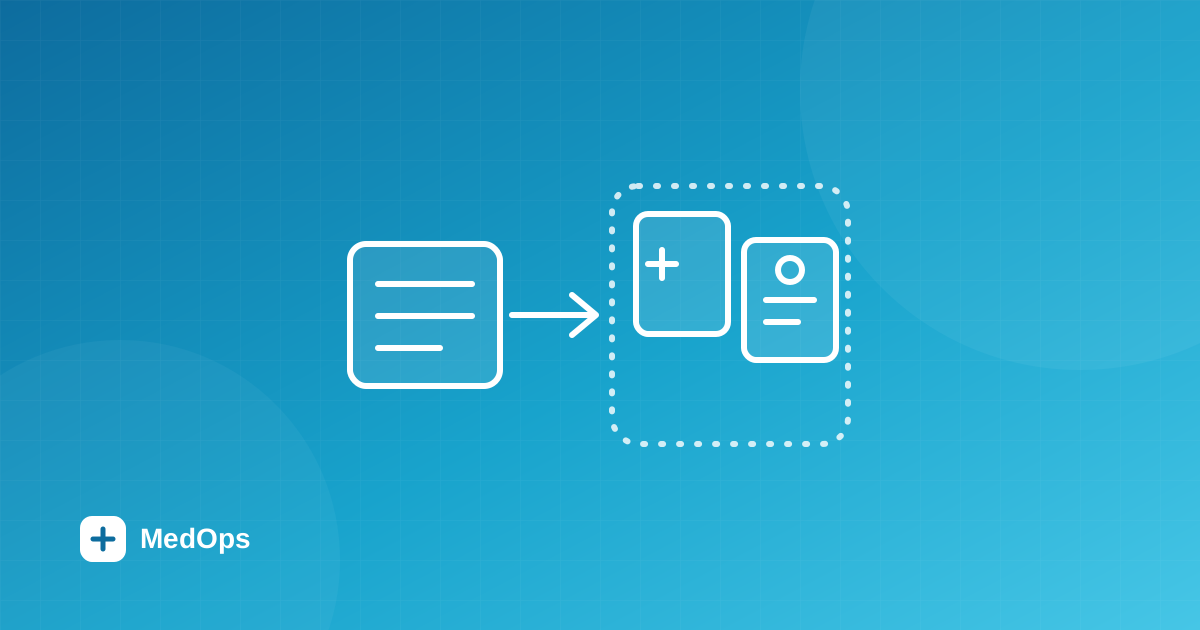
From consultation to bill: designing atomic clinical workflows
A consultation that ends should leave behind a prescription and a bill — both, or neither. Here's why atomicity is the quiet feature that keeps clinical data trustworthy.
 Operations & ERP
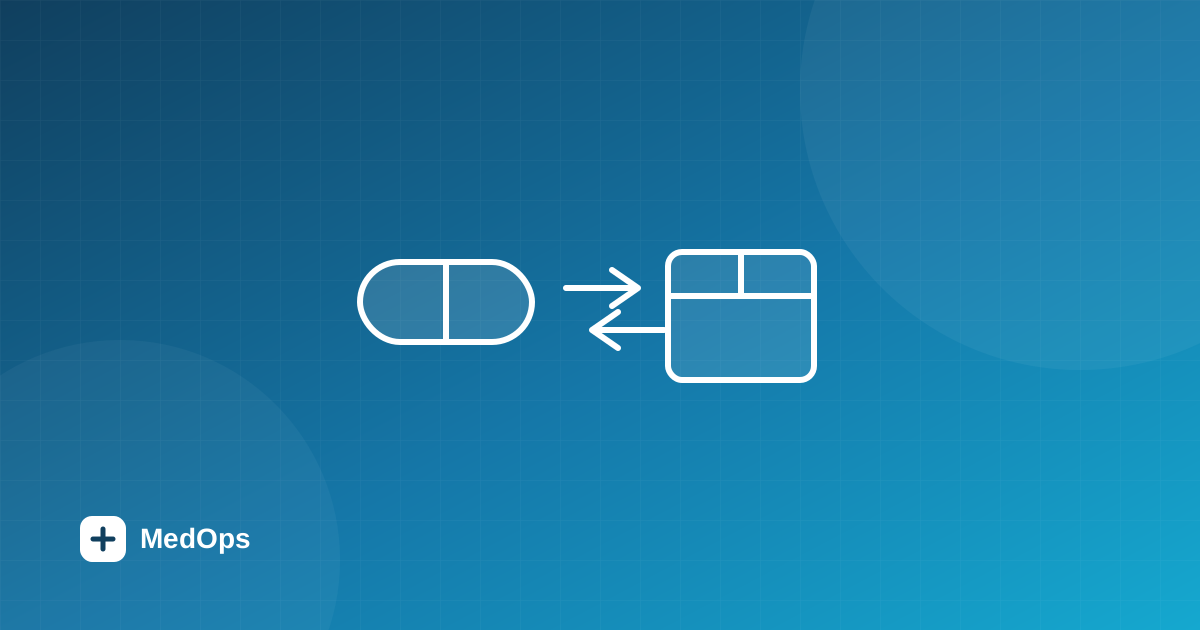
Streamlining pharmacy logistics with real-time ERP & POS sync
When prescriptions and pharmacy stock don't share a system, shelves drift out of sync. Connecting the two removes manual decrements and refill delays.
Get new posts in your inbox
Occasional notes on healthcare software engineering. No spam — unsubscribe anytime.